
Mothers world-wide are wanting to breastfeed their newborns more than ever before due to a combination of micro-plastics in baby formulas and the many health benefits linked to breastfeeding.
And the medtech supporting these mums couldn’t have come at a better time.
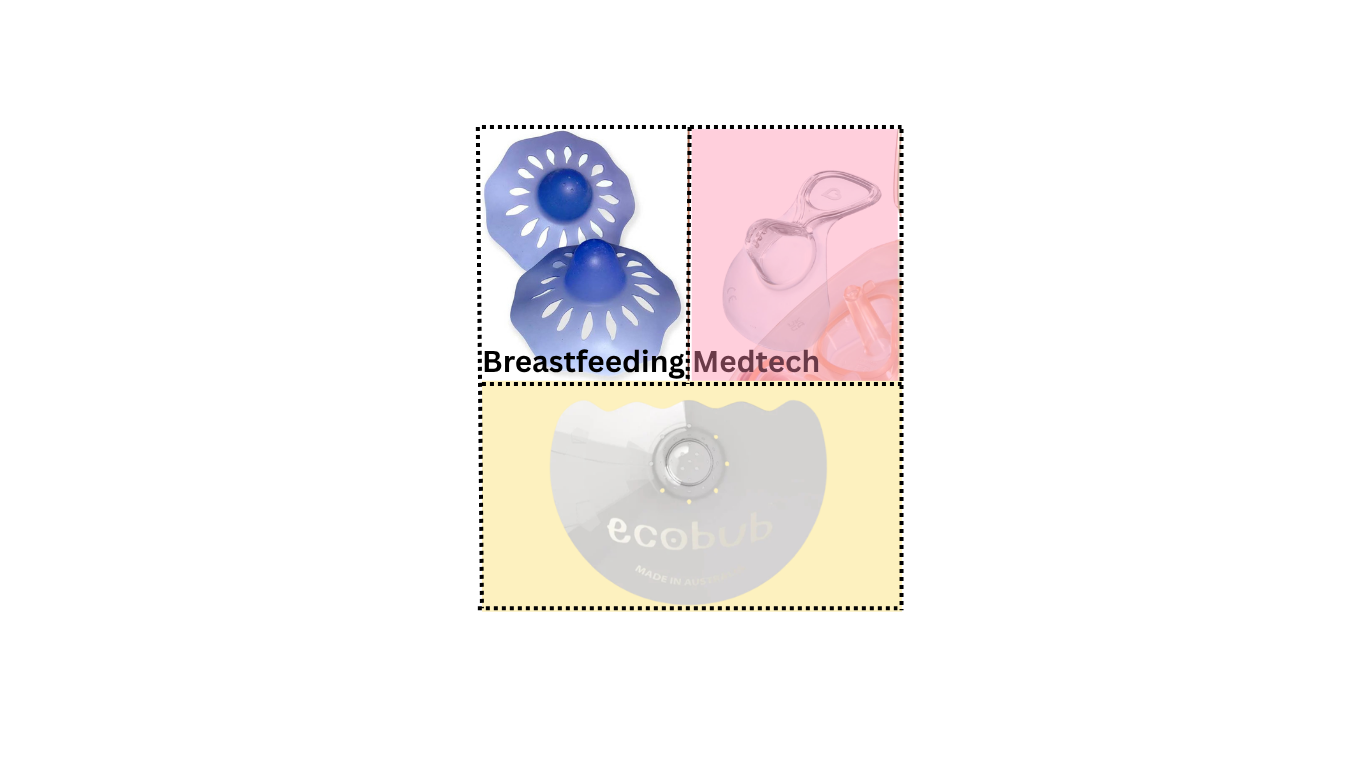
The latest advances in breastfeeding products include colour-changing nipple shields developed by Ceres Chill, supply-tracking shields from Munchkin, and long-standing silicone models from brands like Medela — each reflecting ongoing innovation in materials and design.
Building on this evolution, the ecobub™ MESHIES stretch-fit breastfeeding shield represents the next phase: a shape-morphing design that adapts around the nipple, offering comfort for mums experiencing pain or sensitivity.
The science behind these is completely different to other shields in that it is designed to adapt around the woman’s shape whereas the other shields, being relatively rigid, require the woman’s shape to adapt around them.
This reflects both engineering uplift (micro-perforation, stretch-fit geometry) and a full design-philosophy shift - from ‘one-size rigid’ to ‘adaptive, personalised fit’. It’s the culmination of the evolution: material, shape, user-experience, and clinical insight merged.
In essence, the development of nipple shields has progressed from rigid, often unsuitable materials (animal skin, metal, lead) to silicone and increasingly refined designs that support better latch, comfort and transfer while acknowledging user-experience (visibility, portability, fit). Each shift has addressed previous limitations: comfort, hygiene, fit, transfer efficiency, and user confidence. For these reasons, we believe one of the best nipple shields for breastfeeding/nursing mothers are the ecobub™ MESHIES - especially when it comes to pain.
Here is a timeline of breastfeeding shields through the ages.
- Historically, nipple-shields or protective devices have been used for centuries. As one review notes, “use of nipple shields has been recorded in history for at least 500 years” and they were fashioned from many materials such as animal skins, wood, lead, pewter and silver. These early shields were primarily aimed at protecting sore or cracked nipples or helping babies latch when nipple shape was a barrier. Because materials and manufacturing methods were limited, the shields were rigid, one-size may-fit models, and lacked the clinical evidence or manufacturing focus present in modern designs.
- As manufacturing progressed, breast-feeding aids included shields made of silver, pewter, glass and other hard materials. For example, museum collections list silver shields from the 1800s. These offered more durability than leather or hide, but their rigid form often interfered with natural latch, skin-to-skin contact and milk transfer. The thick, hard materials meant that babies sometimes couldn’t get as deep a latch and mothers had to deal with discomfort or sub-optimal feeding.
- In the 20th century, nipple-shields evolved in material but not always in safety or ergonomics. Shields made from lead, hard plastic or thick rubber were recorded in literature. For example, historical surveys list lead among the materials used. These materials reinforced the idea of protection, but were bulky and could hamper effective feeding.
- Around the 1980s, the shift to silicone materials marked a major milestone. Silicone is hygienic, flexible compared to metal, and compatible with sterilisation. However, early silicone nipple shields tended to be relatively thick-walled, traffic-cone shaped designs — still somewhat rigid and not optimised for minimal interference with the breast-baby interface. The literature notes that older types (hard plastic or thick rubber) led to reduced milk transfer; the concerns were mitigated but not eliminated with early silicone.
- Well-known brands including Medela, Lansinoh, Pigeon and Philips Avent have long supported breastfeeding mothers with silicone shields. In recent decades, innovation has focused on reducing wall-thickness, improving skin-to-skin contact and designing brims with cut-aways so the baby’s nose or chin can touch the breast. The Australian Breastfeeding Association points out that “newer thin silicone nipple shields … don’t interfere as much” with transfer. Additionally, a study in pre-term infants found that use of an ultra-thin silicone shield significantly improved milk transfer without shortening overall breastfeeding duration. PubMed Brands like Haakaa introduced shield designs that merge features of bottle-teats and shields: soft silicone, external bottle-style flange, often with suction bases.
- The latest generation of nipple shields - Munchkins, Ceres chill and ecobub MESHIES emphasise added features and will no doubt inspire continued research into improving breastfeeding support products.


Dejar un comentario
Este sitio está protegido por hCaptcha y se aplican la Política de privacidad de hCaptcha y los Términos del servicio.