
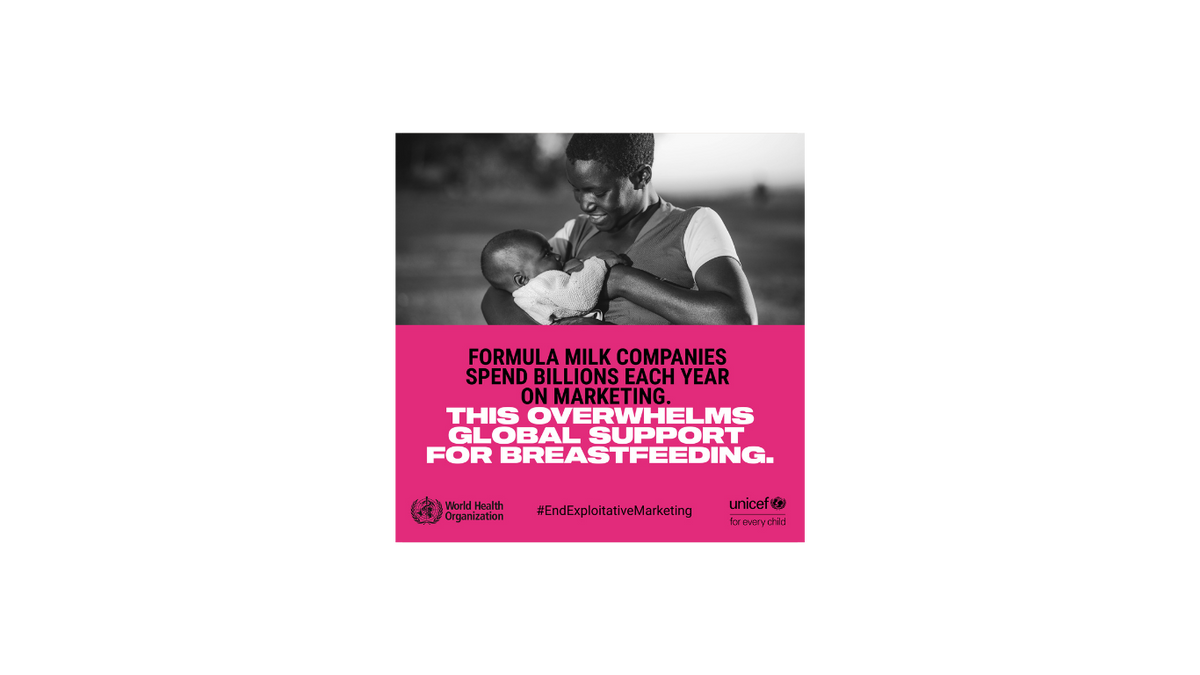
Each year, an estimated 800,000 child deaths and 20,000 maternal breast cancer deaths could be prevented with improved breastfeeding rates.
So why is infant formula still being aggressively marketed to the tune of billions of dollars each year?
Global health leaders including Tedros Adhanom Ghebreyesus of the World Health Organization and former Prime Minister of New Zealand, Helen Clark, have warned that formula marketing undermines breastfeeding. They say it distorts science and exploits parental anxiety during a vulnerable time in their lives.
But there’s another question worth asking: why does formula need marketing at all?
Formula is not an unknown product. Parents already know what it is. Like water, paracetamol or basic staple foods, it serves a clear and specific purpose. It was developed in 1865 by German chemist Justus von Liebig so that babies could still survive if they were unable to have breastmilk.
It was called 'Liebig's Soluble Food for Babies' and the mixture consisted of cow's milk, wheat flour, malt flour, and potassium bicarbonate
Unlike many consumer goods, there are not significant, evidence-based differences between formula brands that justify billions of dollars spent on advertising. Yet companies continue to promote minor ingredient variations as breakthroughs - often implying benefits for sleep, immunity or brain development that are not strongly supported by science.
Some of the false or disorienting claims used by formula milk companies include:
- Formula products with added ingredients improve brain development and immunity
- formula products are needed after 12 months of age;
- that breast milk is inadequate for the nutrition of older infants and children;
- that formula keeps babies fuller for longer and therefore helps them sleep,
- that the quality of breast milk declines with time.
These claims are untrue. They hurt children, and they hurt mothers.
Historically, concerns about false and disorienting marketing practices led to the introduction of the International Code of Marketing of Breast-milk Substitutes in 1981. Unfortunately, this code was made voluntary and as a result, not many people cared about it. The proof is that billions continue to be spent on marketing using social media, influencer partnerships and targeted digital advertising.
It is time to enforce ‘The Code’.
None of our blogs are medical advice. For medical advice, please consult your health professional.



Leave a comment
This site is protected by hCaptcha and the hCaptcha Privacy Policy and Terms of Service apply.