

Nipple shields are far more common in Australia than most people realise. And with so many more women wanting to breastfeed now, interest in them has increased. While there are no national usage statistics, lactation consultants consistently report that many women use a shield at some stage in the early weeks. Shields aren’t a failure — they’re a tool — and often a short-term bridge that helps breastfeeding continue when things feel challenging.
Why do women use nipple shields?
Australian mothers typically turn to nipple shields for a few key reasons:
- Latch difficulties
- Flat or inverted nipples
- Painful, damaged, or bleeding nipples in the early learning period
- Overactive let-down, where a shield can help moderate flow
- Transitioning from bottle to breast
These situations can disrupt feeding rhythm and comfort. A nipple shield, used with support, can make it possible to continue breastfeeding while underlying issues are addressed.
Understanding nipple size and why flexibility matters
The average human nipple is roughly 0.9 cm high and 1.2 cm in diameter, but this varies widely. Nipples also change significantly during pregnancy and breastfeeding — often becoming larger, softer, stretchier, or more elastic as feeding patterns evolve.
This natural variability means that a one-size-fits-all or fixed-form shield doesn’t suit everyone. Some traditional shields hold the nipple in a set shape, which works for some but not for others.
What types of nipple shields are available?
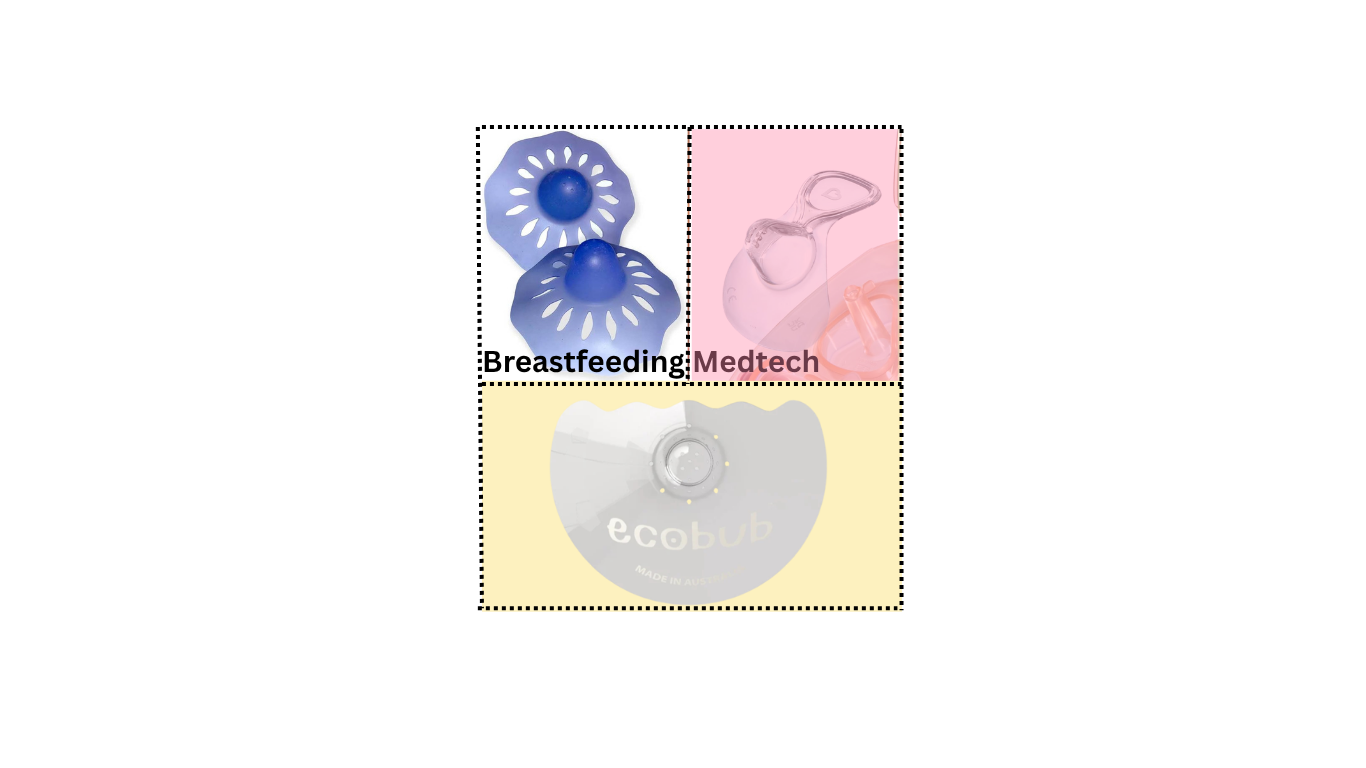
Australia offers a wide mix: thin contact shields (Medela, Lansinoh), butterfly-shaped silicone shields (Pigeon), and bottle-style shields (Haakaa).
Then there are newer designs like the ecobub MESHIES breastfeeding shield, made from soft silicone with micro-perforations that allow the nipple to adapt and morph naturally during feeding. This shield is primarily designed to address painful nipples but also can support a more physiologically natural latch compared to fixed-form designs.
How do you choose the right shield?
A good shield should feel comfortable, allow the nipple to move freely, and help your baby maintain suction without slipping. Consider:
- Size — proper fit matters.
- Flexibility — adaptive shields like ecobub MESHIES can suit a broad range of nipple changes.
- Purpose — choose the style that matches your challenge.
- Support — ideally get guidance from a lactation consultant.
For many Australian mothers, a nipple shield is a small tool that keeps breastfeeding going — and today, the options are better and more adaptable than ever.
This is not medical advice. For medical advice, please consult your health professional.


Leave a comment
This site is protected by hCaptcha and the hCaptcha Privacy Policy and Terms of Service apply.