
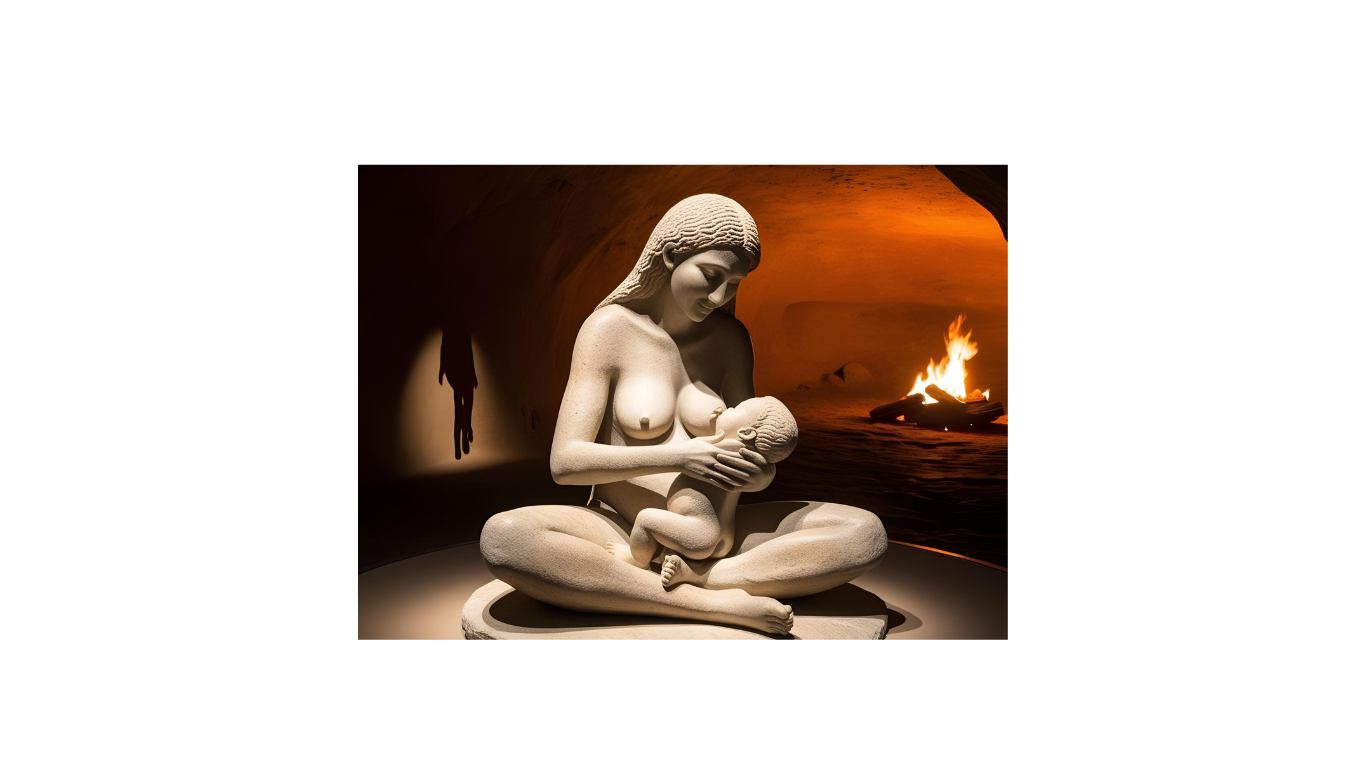
For roughly 250,000 years, baby formula didn’t exist—and it wasn’t missed. Human survival depended on breast milk, a naturally evolved, complete source of infant nutrition. Breastfeeding wasn’t just a method of feeding; it was a cornerstone of infant survival, immunity, and bonding. In small, kin-based societies, the community often supported nursing mothers, and wet-nursing was a widespread solution when a mother couldn’t feed her child.
The development of baby formula only emerged in the 1800s. It was driven by the industrial revolution where peoples' lives started adapting around schedules and work shifts in factories. As a result, breast milk started drying up for a lot of female factory workers because they were unable to demand feed their babies. If babies are not demand fed, a mothers' milk will often dry up. In 1865, German chemist Justus von Liebig created the first commercial infant formula, combining cow’s milk, wheat flour, and potassium bicarbonate. It was a major innovation—but far from perfect. Early formulas lacked the complex immunological and nutritional components of human milk, and their use often led to malnutrition or illness, especially where clean water was scarce.
By the mid 1900s advances in food science led to more refined and fortified formulas, offering a viable alternative to breast milk in Western countries. At the same time, aggressive marketing campaigns—especially post war and up until the 1970s, marketed baby formula as modern and superior. Complementing this strategy, doctors helped the formula companies by doubling up as salesmen, promoting baby formula to their patients in the same way as some doctors promote pain killers to their patients. Many women believed this aggressive marketing and as a result, by 1970, most women in the USA, bottle fed their babies with baby formula.
By the early 1970s however health concerns, the women's movement and environmental engagement drove heightened interest back into breastfeeding. Almost half the world's mothers now breastfeed their babies for the first six months of life. And according to the World Health Organisation, this figure is rising.
Nature’s original design is still unmatched. Breast milk adapts in real-time to an infant’s needs, offers passive immunity, and supports microbiome development. Like blood, it is not possible to replicate breast milk. However baby formula serves a vital role where breastfeeding is not possible or chosen, but it is ultimately a technological workaround to a biological standard honed over millennia.
The recent resurgence in breastfeeding advocacy reflects a growing recognition of this. While formula is a critical tool in infant health care, especially in emergencies, its development is a relatively recent response to social and industrial shifts—not a replacement for the evolutionary brilliance of human milk.


Leave a comment
This site is protected by hCaptcha and the hCaptcha Privacy Policy and Terms of Service apply.