
Whether you've just been handed a nipple shield by your midwife or you're doing your research before baby arrives, this glossary covers many things you need to know - from what a nipple shield actually is, to how long mums typically use them, to what they're made of.
1. What is a nipple shield?
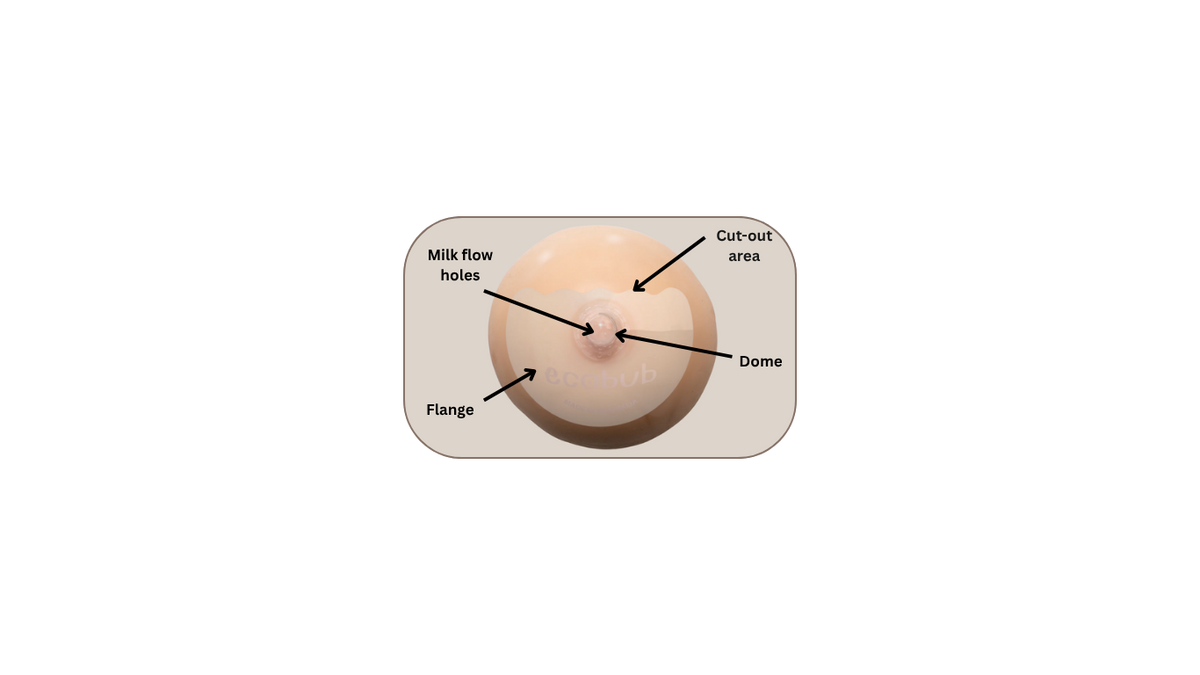
A nipple shield is a thin, flexible cover worn directly over the nipple and areola during breastfeeding. Shaped like a shallow hat or sombrero, it sits against the breast and allows the baby to feed through a small teat-like tip at the top.
It acts as a gentle bridge between your nipple and your baby's mouth - helping babies who are struggling to latch, or supporting mums who are experiencing pain while breastfeeding. Or both.
In simple terms: Think of a nipple shield as a helper tool that sits between your breast and your baby's mouth to make feeding easier for both of you.
2. Are the areas of a nipple shield labelled?
Yes - a nipple shield has several distinct zones, each designed with a specific purpose in mind. Understanding the anatomy of a nipple shield can help you choose the right size and use it correctly. Above is a labelled image of the ecobub shield from a top-down view.
3. When is it advised to use a nipple shield?
Nipple shields are typically recommended by a midwife, lactation consultant, or maternal health nurse when breastfeeding is proving difficult. They should ideally be introduced under professional guidance rather than independently, as correct fit and use make a significant difference. They can assist with latch difficulties where the baby is unable to maintain a deep latch and keeps slipping off the breast; Flat or inverted nipples where the teat shape helps give baby something to draw into their mouth and hold; Sore, cracked, or tender nipples where the shield can help reduce direct friction during feeding while the nipple heals; Premature or low-birth-weight babies because smaller babies often lack the muscle tone to sustain a latch and a shield can provide extra stimulus; Engorgement. This is because a very full, firm breast can be harder for a newborn to latch onto and a shield can make it more accessible.
4. Are nipple shields also known as breastfeeding shields?
Yes — the terms nipple shield and breastfeeding shield are used interchangeably, and you'll often see them listed under both names when shopping online or at the pharmacy.
Other names you may encounter include:
- Nursing shield
- Lactation shield
- Breastfeeding nipple cover
- Feeding shield
- Silicone nipple shield.
5. Do many women use nipple shields?
More mums use nipple shields than you might think - they're one of the most widely recommended breastfeeding aids in Australia and globally. Research indicates that their use has increased significantly as lactation support has become more widespread.
- One in four breastfeeding mums may use a nipple shield at some stage
- 70% of use occurs in the first 2–4 weeks after birth
- #1 most commonly recommended breastfeeding accessory by midwives
6. What are nipple shields usually used for?
While the clinical uses are outlined above, nipple shields are also used by mums for a range of practical, everyday breastfeeding challenges: The most common uses include helping a baby who has developed a preference for bottle teats (sometimes called nipple confusion) return to the breast, supporting mums who want to continue breastfeeding despite persistent nipple pain, and helping maintain a milk supply when direct feeding is otherwise impossible.
Nipple shields are a support tool - not a permanent solution. Most healthcare professionals recommend working towards breastfeeding without the shield where possible, with the goal of a direct latch when both mum and baby are ready.
7. How long do breastfeeding mums use nipple shields for?
Duration varies widely depending on the reason for use. Some mums use a nipple shield for just a few feeds; others use one for several months. There is no single ‘right’ timeline - the goal is always to support a sustainable breastfeeding journey for both mum and baby.
8. What are nipple shields made of?
The vast majority of modern nipple shields are made from ultra-thin, medical-grade or food-grade silicone. Older generations of nipple shields were made from rubber or latex, but these have largely been phased out due to allergy concerns and the superior feel of silicone against the skin. Silicone is the material of choice because it is:
- BPA-free & non-toxic
- Soft & flexible
- Sterilisable
- Odourless & tasteless
- Durable & reusable
- Hypoallergenic
9. Where are most nipple shields made?
Nipple shields sold in Australia come from a range of manufacturing countries, including being ‘Made in Australia’. Many brands manufacture in Europe (particularly Germany, the Netherlands, and Scandinavia) and in parts of Asia (including China and South Korea), with strict quality standards applied regardless of origin.
10. Can nipple shields help with the transition to bottle feeding for women returning to work?
Yes - this is actually one of the less-discussed but increasingly common uses of nipple shields. For mums returning to work who are planning to move to expressed breast milk (EBM) via a bottle, a nipple shield can serve as a helpful stepping stone in the transition.
Because a nipple shield closely mimics the shape and feel of a bottle teat, babies who are already comfortable feeding from a shield may find it easier to accept a bottle without the common resistance that comes with switching from direct breastfeeding.
Returning to work? If your baby is accustomed to a nipple shield, gradually introducing expressed breast milk feeds via a bottle with a similarly shaped slow-flow teat can make the transition feel more familiar. Speak with your lactation consultant or maternal health nurse about the best approach for your baby's age and temperament. It's worth noting that nipple shields are not primarily designed as a weaning tool - their role in the bottle transition is a secondary benefit observed in practice rather than a medical recommendation.


Leave a comment
This site is protected by hCaptcha and the hCaptcha Privacy Policy and Terms of Service apply.