
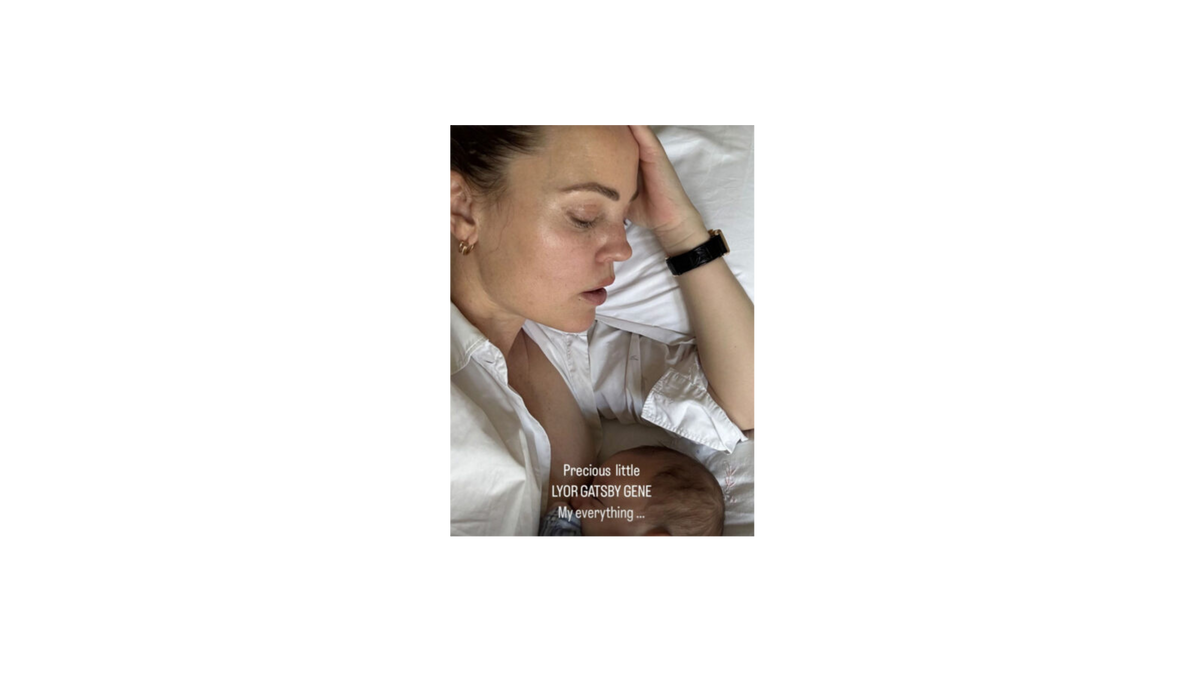
Australian actress Melissa George thought nothing could get in the way of her commitment to breastfeeding her babies. However …
There is no family court in the world that legally protects exclusive breastfeeding.
While judges are in some jurisdictions required to consider breastfeeding when making parenting orders, there is no legal obligation.
Because breastfeeding and its short-term and long-term physical and mental health benefits, to the child and mother, are not considered important enough.
The non-breastfeeding parent’s contact with the baby is considered more important than legally protecting breastfeeding. This is despite there being no randomised controlled trials (RCTs) to prove a non-breastfeeding parent’s overnight contact with a young baby is more important than the long term health benefits from breastfeeding.
Two Australian cases highlight the court favourably siding with the father’s overnight contact ahead of the baby’s breastfeeding routine.
In Li v Zhou (2015), the Family Court found overnight stays with the father could proceed, even if it disrupted breastfeeding the 8 month old baby.
Another case, Zanda & Zanda (2013), dealt with a 14-month-old child. The court said breastfeeding was not important enough to prevent overnight stays with the father.
In Kerala, India (2024) there was a case involving a breastfed baby where custody was granted to the father.
And in the USA, U.S. – J.R.M. v. J.E.A. (Pennsylvania, 2011) a father was successfully able to repeal the initial custody given to the mother.
In the UK, where most babies are formula fed, overnight visits can be ordered if the judge believe the child can adjust.
When Golden Globe nominated Australian actress, Melissa George, and her French entrepreneur partner, Jean-David Blanc’s relationship ended in a court battle. their second son was only 10 months old, and breastfeeding. George has been quoted recounting how the father of her baby mocked her for breastfeeding by demanding she stop breastfeeding because he thought it was ‘harming’ their baby son. George also said the French police told her that her 10 month old baby was too old to be breastfeeding. This is despite medical advice from the World health Organisation recommending babies are exclusively breastfed for the first 6 months of life before gradually introducing solids (to complement breastfeeding) after 6 months of age.
Who would you trust with medical advice? French police? A lawyer? A judge? A business entrepreneur? Or the World Health Organisation?
Regardless of George’s wishes to follow medical advice, 50:50 contact was determined by a judge as what was best for the baby. There is medical evidence to show long periods of separation can disrupt breastfeeding and that it requires significant extra work in pumping to maintain supply.
La Trobe University’s Professor Jennifer McIntosh cautioned against frequent overnight stays with the non-primary caregiver under 2 years, especially for infants under one. And Penn State University’s Dr Samantha Tornello, found frequent overnight visits with the non-resident parent were associated with more attachment insecurity in infants.
Worldwide, documented cases where a mother has been granted exclusive care of an infant under six months primarily due to breastfeeding are extremely rare.




Laisser un commentaire
Ce site est protégé par hCaptcha, et la Politique de confidentialité et les Conditions de service de hCaptcha s’appliquent.