
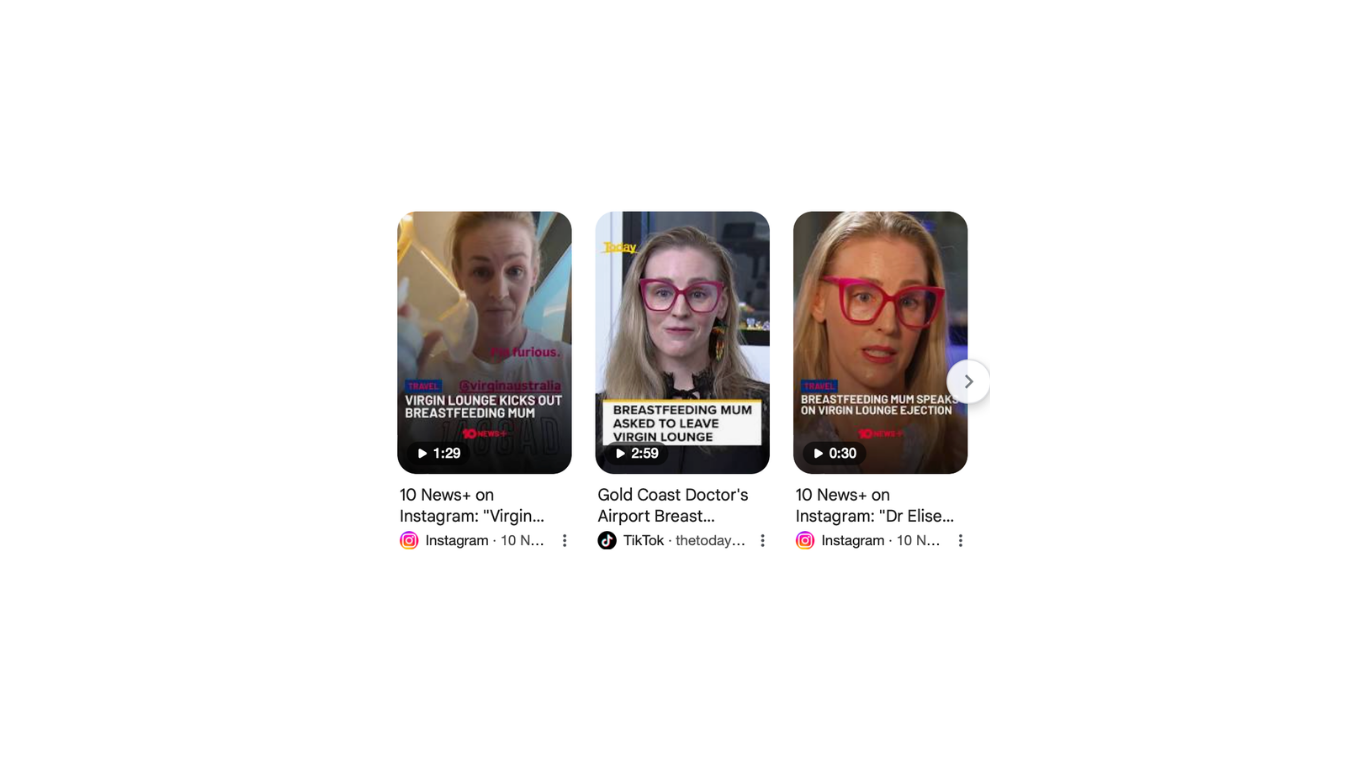
Despite breastfeeding being biologically normal, it is often treated as socially WRONG.
Across the world — including in Australia — there are repeated reports of mothers being asked to stop breastfeeding, cover up, or even leave public venues. One recent example involved Dr Elise Turner, a medical doctor and mum, who was asked to leave a VIRGIN airport lounge while discreetly pumping under her clothing.
What’s striking is the contrast.
Bottle feeding is widely accepted in public spaces — restaurants, airports, cafés — yet breastfeeding, which is the biological norm, continues to attract scrutiny, humiliation and shame.
This matters because breastfeeding is not just a feeding method — it is a public health issue. Research consistently shows long-term health benefits for both baby and mother, including reduced risks of infections, autoimmune conditions and certain cancers.
When mothers are made to feel uncomfortable and shamed for breastfeeding in public, it creates a ripple effect. Some may avoid leaving the house. Others may switch to (more socially acceptable) baby formula earlier than planned. Over time, this contributes to lower breastfeeding rates and worse health outcomes for mothers and babies. This results in an increase in demand for our health system to the tune of billions of dollars worldwide.
There is also a subtle but powerful cultural message at play. Bottle feeding is considered ‘acceptable’ — it blends into public life. (This is despite the powerful marketing messages which claim bottle feeding mums are the underdogs and hence, discriminated against.
It is in fact the complete opposite.
However big formula companies benefit from the 'underdog' messaging so spend billions of dollar each year consolidating this lie and manipulating society into parroting it for them.
Despite the formula company messaging, it is breastfeeding mums that are shamed, humiliated and asked to leave public spaces
A truly supportive society wouldn't just “allow” breastfeeding — it would normalise and encourage it and also highlight the mammoth health and financial benefits.
Until feeding a baby at the breast is treated (at the very least) as well as formula feeding parents, many breastfeeding mothers will continue to navigate unnecessary barriers during an already demanding time.




Laisser un commentaire
Ce site est protégé par hCaptcha, et la Politique de confidentialité et les Conditions de service de hCaptcha s’appliquent.